Competitive analysis and export strategy
A Lithuanian Farmer Surveying its Competitiveness in the European Union
The Question
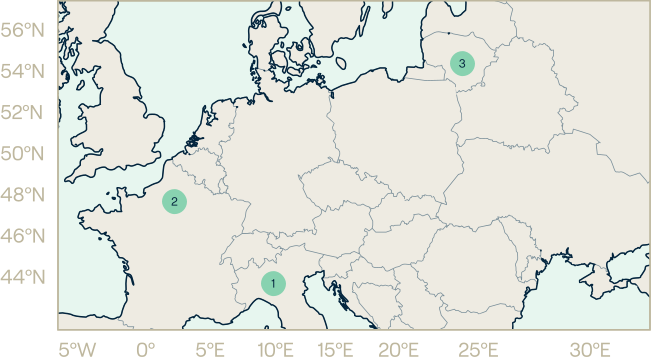
A farmer based in Lithuania surveys their competitiveness across multiple sites within the same free-trade zone (European Union) to determine whether ozone exposure provides an advantage or disadvantage, and which crops to prioritise for export in the coming years.
The Solution
By using the AerYield service, the farmer gains insights in current and future yield losses across several locations of his choice. For this case study we assumed the crop, management practices, and growing season are the same across the sites. Differences in yield loss reflect spatial variation in ozone exposure, not crop sensitivity or farming practices.
The Insight
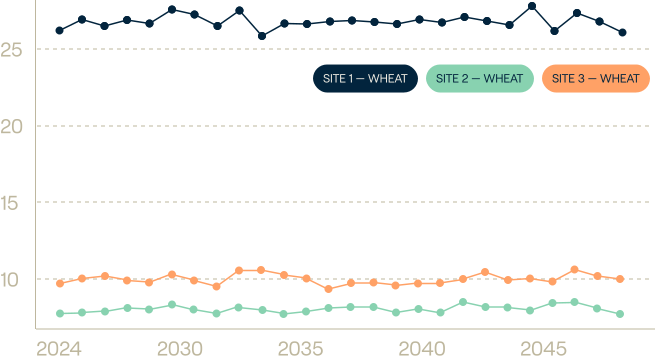
In 2024 and beyond, ozone-related yield losses for the same crop can vary by more than three-fold across different locations – highlighting that where food is grown can be as important as what is grown when planning export strategies for both the near and distant future. As shown in the figure, the Lithuanian farmer has a decisive structural advantage over the selected competitor in Italy in terms of ozone-related yield losses, but performs slightly worse than the competitor in France.
Wheat location choice across Europe
Site locations
2024
Project annual yield loss due to ozone
Wheat location across Europe — 2024
2025 — 2050